

Team Viz
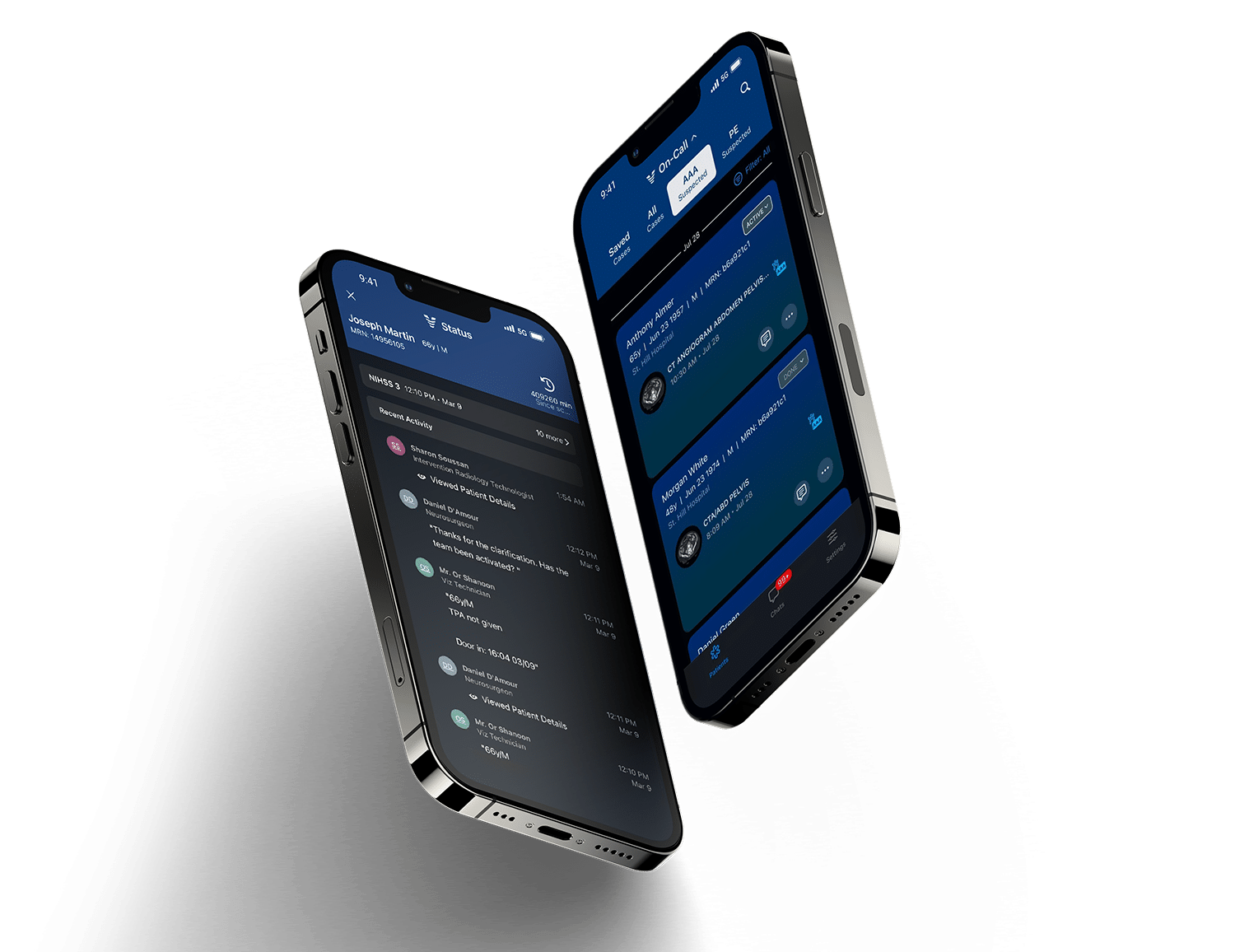
On a Monday morning, Dr. Hayner — Critical Care Pulmonologist at TriHealth, Director of the Medical-Surgical ICU, and a national KOL in pulmonary embolism (PE) and COPD — received a Viz PE alert from one of TriHealth’s spoke emergency departments.
As he opened the app to review the images, his phone buzzed with a text from his sister.
His brother Jay, an internal medicine physician currently undergoing treatment for metastatic melanoma, had just arrived in the emergency department with shortness of breath.
Moments later, Jay went into cardiac arrest.
In what Dr. Hayner describes as “the most surreal moment of my life,” the scans he was reviewing on his screen were his brother’s.
They showed a life-threatening pulmonary embolism.
When Seconds Matter
Fortunately, Jay was resuscitated quickly — but he remained in grave danger.
Because TriHealth had an established PE response process in place, the Pulmonary Embolism Response Team (PERT) was instantly notified. Within moments, a coordinated action plan was underway.
Jay was rapidly transferred to a specialized team prepared to initiate extracorporeal membrane oxygenation (ECMO) and perform mechanical embolectomy. Within 48 hours, his clot burden was significantly reduced. He was off ECMO. Off mechanical ventilation. Sitting up in a chair.
The speed of recognition, communication, and intervention made the difference.
“This was possible due to the quick work and competence of the entire medical staff,” Dr. Hayner shared, “as well as having an established process in place to streamline accurate assessments and effective and timely communication to coordinate it all.”
The ROI No One Puts in a Business Case
Several years earlier, Dr. Hayner had been asked by hospital administration to build a financial case for adopting the Viz PE solution.
He did.
“It was approved after making primarily a financial ROI case,” he recalls. “I never thought for a second that the real ROI was that I was going to get my brother back.”
That moment reframed everything.
Technology alone does not save lives. Skilled clinicians do. Prepared teams do. Established workflows do.
But when those teams are equipped with real-time AI-powered suspected detection and streamlined communication tools, they can act faster — and with greater confidence — when every second counts.
In this case, that speed and coordination meant a brother, a physician, and a family member got another chance.
Why This Work Matters
At Viz.ai, we often talk about reducing time to treatment, accelerating care pathways, and improving outcomes at scale. Those metrics matter. They represent thousands of patients across the country.
But stories like this remind us that behind every alert is a person. A family. A future that hangs in the balance.
The return on investment in AI-powered care coordination is often measured in operational efficiency, transfer times, and improved throughput.
Sometimes, it’s measured in something far more personal.
“I’m forever grateful for the role Viz played in this,” Dr. Hayner said.
We are honored to support clinicians like Dr. Hayner and the dedicated teams at TriHealth who work tirelessly every day to deliver life-saving care when it matters most.
Because at the end of the day, this is why we do what we do.
Viz Vascular
AI-powered suite of solutions designed to transform patient outcomes in vascular medicine.
Learn more